Saturday, May 7, 2016

Blue Solar Storm/ Blue Cosmic Monkey - Spectral Serpent Moon of Liberation, Day 6


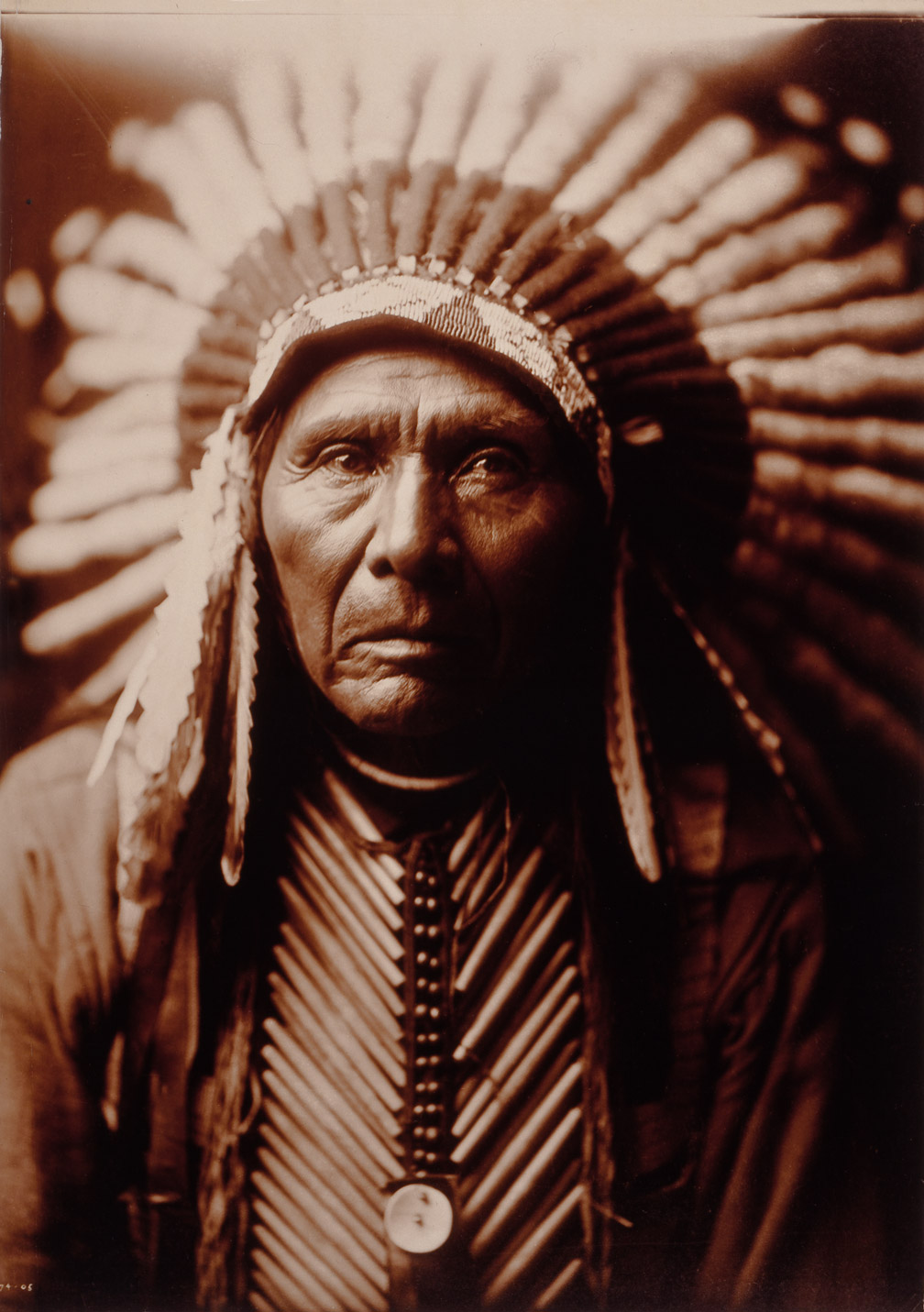
Image result for tecumseh

Tecumseh /tᵻˈkʌmsə, tᵻˈkʌmsi/ was a Native American leader of the Shawnee and a large tribal confederacy which opposed the United States during Tecumseh's War, and became an ally of Britain in the War of 1812. 


Tecumseh (1768 - 1813),  grew up in the Ohio Country during the American Revolutionary War and the Northwest Indian War, where he was constantly exposed to warfare. With Americans continuing to move west after the British ceded the Ohio Valley to the new United States in 1783, the Shawnee moved farther northwest. In 1808, they settled Prophetstown in present-day Indiana. With a vision of establishing an independent Native American nation east of the Mississippi under British protection, Tecumseh worked to recruit additional tribes to the confederacy from the southern United States.

During Tecumseh's boyhood, white frontiersmen slew his father Pucksinwah at the Battle of Point Pleasant during Lord Dunmore’s War in 1774. The frontiersmen had crossed onto Indian land in violation of a recent treaty. Tecumseh resolved to become a warrior like his father and to be "a fire spreading over the hill and valley, consuming the race of dark souls".

At age 15, after the American Revolutionary War ended in 1783, Tecumseh joined a band of Shawnee who aimed to stop the white invasion of their lands by attacking settlers' flatboats traveling down the Ohio River from Pennsylvania. In time, Tecumseh came to lead his own band of warriors. For a while, these Indian raids became so effective that river traffic virtually ceased.

During the War of 1812, Tecumseh's confederacy allied with the British and helped in the capture of Fort Detroit. Prior to the raid, Chief Tecumseh delivered a powerful speech upon a rock that is preserved to this day at Fort Malden. After the U.S. Navy took control of Lake Erie in 1813, the Native Americans and British retreated. American forces caught them at the Battle of the Thames, and killed Tecumseh in October 1813. With his death, his confederation disintegrated, and the Native Americans had to move west again, yet Tecumseh became an iconic folk hero in American, Aboriginal and Canadian history.

Here is also, however, the text of quite a different-toned speech which Tecumseh allegedly delivered to a band of Osages on his way back home in 1811. It was reported by John Dunn Hunter, an Anglo-American whose parents had been killed by the Kickapoos, and who had been later raised among the Osages:


"Brothers, we all belong to one family; we are all children of the Great Spirit; we walk in the same path; slake our thirst at the same spring; and now affairs of the greatest concern lead us to smoke the pipe around the same council fire! Brothers, we are friends; we must assist each other to bear our burdens. The blood of many of our fathers and brothers has run like water on the ground, to satisfy the avarice of the white men. We, ourselves, are threatened with a great evil; nothing will pacify them but the destruction of all the red men. Brothers, when the white men first set foot on our grounds, they were hungry; they had no place on which to spread their blankets, or to kindle their fires. They were feeble; they could do nothing for themselves. Our fathers commiserated their distress, and shared freely with them whatever the Great Spirit had given his red children. They gave them food when hungry, medicine when sick, spread skins for them to sleep on, and gave them grounds, that they might hunt and raise corn. Brothers, the white people are like poisonous serpents: when chilled, they are feeble and harmless; but invigorate them with warmth, and they sting their benefactors to death. The white people came among us feeble; and now that we have made them strong, they wish to kill us, or drive us back, as they would wolves and panthers. Brothers, the white men are not friends to the Indians: at first, they only asked for land sufficient for a wigwam; now, nothing will satisfy them but the whole of our hunting grounds, from the rising to the setting sun. Brothers, the white men want more than our hunting grounds; they wish to kill our old men, women, and little ones. Brothers, many winters ago there was no land; the sun did not rise and set; all was darkness. The Great Spirit made all things. He gave the white people a home beyond the great waters. He supplied these grounds with game, and gave them to his red children; and he gave them strength and courage to defend them. Brothers, my people wish for peace; the red men all wish for peace; but where the white people are, there is no peace for them, except it be on the bosom of our mother. Brothers, the white men despise and cheat the Indians; they abuse and insult them; they do not think the red men sufficiently good to live. The red men have borne many and great injuries; they ought to suffer them no longer. My people will not; they are determined on vengeance; they have taken up the tomahawk; they will make it fat with blood; they will drink the blood of the white people. Brothers, my people are brave and numerous; but the white people are too strong for them alone. I wish you to take up the tomahawk with them. If we all unite, we will cause the rivers to stain the great waters with their blood. Brothers, if you do not unite with us, they will first destroy us, and then you will fall an easy prey to them. They have destroyed many nations of red men, because they were not united, because they were not friends to each other. Brothers, the white people send runners among us; they wish to make us enemies, that they may sweep over and desolate our hunting grounds, like devastating winds, or rushing waters. Brothers, our Great Father over the great waters is angry with the white people, our enemies. He will send his brave warriors against them; he will send us rifles, and whatever else we want—he is our friend, and we are his children. Brothers, who are the white people that we should fear them? They cannot run fast, and are good marks to shoot at: they are only men; our fathers have killed many of them: we are not squaws, and we will stain the earth red with their blood. Brothers, the Great Spirit is angry with our enemies; he speaks in thunder, and the earth swallows up villages, and drinks up the Mississippi. The great waters will cover their lowlands; their corn cannot grow; and the Great Spirit will sweep those who escape to the hills from the earth with his terrible breath. Brothers, we must be united; we must smoke the same pipe; we must fight each other’s battles; and, more than all, we must love the Great Spirit: he is for us; he will destroy our enemies, and make all his red children happy."

www.wikipedia.com


CAUAC


Kin 139: Blue Solar Storm


I pulse in order to catalyze
Realizing energy
I seal the matrix of self-generation
With the solar tone of intention
I am guided by the owner of vision.


Super-mental civilizations are those in which the mental nature of reality has been comprehended and mastered.*


*Star Traveler's 13 Moon Almanac of Synchronicity, Galactic Research Institute, Law of Time Press, Ashland, Oregon, 2015-2016.


The Sacred Tzolk'in 


Manipura Chakra (Limi Plasma)


5/6/16 White Galactic Mirror/ White Crystal Dog - Spectral Serpent Moon of Liberation, Day 5


Image result for chief pontiac

Chief Pontiac, or Obwendiyag (c. 1720 - April 20, 1769), was an Odawa (Ottawa) war chief.


Noted for his role in Pontiac's War (1763–1766), an American Indian struggle against British military occupation of the Great Lakes region and named for him. It followed the British victory in the French and Indian War, the North American front of the Seven Years' War. Pontiac's importance in the war that bears his name has been debated. Nineteenth-century accounts portrayed him as the mastermind and leader of the revolt, but some subsequent scholars argued that his role had been exaggerated. Historians today generally view him as an important local leader who influenced a wider movement that he did not command.

The war began in May 1763 when Pontiac and 300 followers attempted to take Fort Detroit by surprise. His plan foiled, Pontiac laid siege to the fort, where he was eventually joined by more than 900 warriors from a half-dozen tribes. Meanwhile, messengers spread the word of Pontiac's actions, and the war expanded far beyond Detroit. In July 1763, Pontiac defeated a British detachment at the Battle of Bloody Run, but he was unable to capture the fort. In October he lifted the siege and withdrew to the Illinois Country.

Although Pontiac's influence had declined around Detroit because of the unsuccessful siege, he gained stature as he continued to encourage resistance to the British. Seeking to end the war, British officials made Pontiac the focus of their diplomatic efforts. In July 1766, Pontiac made peace with British Superintendent of Indian Affairs Sir William Johnson. The attention that the British paid to Pontiac resulted in resentment among other Native leaders, as the war effort was decentralized and Pontiac claimed greater authority than he possessed. Increasingly ostracized, in 1769 he was assassinated by a Peoria warrior.

Contemporary documents reveal little about Pontiac before 1763. He was probably born between 1712 and 1725, perhaps at an Ottawa village on the Detroit or Maumee rivers.[2] The tribal affiliation of his parents is uncertain. According to an 18th-century Ottawa tradition, Pontiac's mother was an Ottawa and his father an Ojibwa, although some sources claim that one of his parents was a Miami. Pontiac was always identified as an Ottawa by people who knew him.[3] He had also lived in close proximity to Fort Detroit, which he later besieged, since 1732.

By 1747, Pontiac had become an Ottawa war leader, when he allied with New France against a resistance movement led by Nicholas Orontony, a Huron leader.[4] Pontiac continued to support the French during the French and Indian War (1754–1763) against British colonists and their Indian allies. Although there is no direct evidence, he may have taken part in the famous French and Indian victory over the Braddock expedition on July 9, 1755.

In one of the earliest accounts of Pontiac, Robert Rogers, a noted British frontier soldier, claimed to have met with the warrior chief in 1760, although many details in Rogers' story are unreliable. Rogers wrote a play about Pontiac called Ponteach: or the Savages of America (1765), which helped to make the Ottawa leader famous and began the process of mythologizing about him. According to historian Richard White, the play made Pontiac "the most famous Indian of the eighteenth century".

Historians have differed in their assessments of Pontiac's importance. Older accounts of the war portrayed Pontiac as a savage but brilliant mastermind behind a massive "conspiracy", which was planned in advance. Historians today generally agree that Pontiac's actions at Detroit were the spark that instigated the widespread uprising, and that he helped to spread the resistance by sending emissaries urging other leaders to join it, but he did not command the various tribal war leaders as a whole. They operated in a highly decentralized way. In addition, Native leaders around Fort Pitt and Fort Niagara, for example, had long been calling for resistance to the British; they were not led by Pontiac. According to historian John Sugden, Pontiac "was neither the originator nor the strategist of the rebellion, but he kindled it by daring to act, and his early successes, ambition, and determination won him a temporary prominence not enjoyed by any of the other Indian leaders.


ETZNAB


Kin 138: White Galactic Mirror


I harmonize in order to reflect
Modeling order
I seal the matrix of endlessness
With the galactic tone of integrity
I am guided by the power of spirit.


Compassion is unconditional giving.  It means exchanging yourself for others, putting yourself in other' shoes.  In this way, we cease judgment and equalize perceptions of others.*


*Star Traveler's 13 Moon Almanac of Synchronicity, Galactic Research Institute, Law of Time Press, Ashland, Oregon, 2015-2016.


The Sacred Tzolk'in 


Vishuddha Chakra (Alpha Plasma)


Thursday, May 5, 2016

Red Resonant Earth/ Red Spectral Moon - Spectral Serpent Moon of Liberation, Day 4


Image result for sitting bull quotes

Chief Sitting Bull, 1831 - 1890, Hunkpapa Lakota.


"The love of possessions is a disease with them (Americans).  They take tithes from the poor and weak to support the rich who rule. They claim this mother of ours, the Earth, for their own way, and fence the neighbors away.  If America had been twice the size it is, there still would not have been enough." 

Sitting Bull


Sitting Bull (Lakota: Tȟatȟáŋka Íyotake in Standard Lakota Orthography, also nicknamed Húŋkešni or "Slow"; c. 1831 – December 15, 1890) was a Hunkpapa Lakota holy man who led his people during years of resistance to United States government policies. He was killed by Indian agency police on the Standing Rock Indian Reservation during an attempt to arrest him, at a time when authorities feared that he would join the Ghost Dance movement.

Before the Battle of the Little Bighorn, Sitting Bull had a vision in which he saw many soldiers, "as thick as grasshoppers," falling upside down into the Lakota camp, which his people took as a foreshadowing of a major victory in which a large number of soldiers would be killed. About three weeks later, the confederated Lakota tribes with the Northern Cheyenne defeated the 7th Cavalry under Lt. Col. George Armstrong Custer on June 25, 1876, annihilating Custer's battalion and seeming to bear out Sitting Bull's prophetic vision. Sitting Bull's leadership inspired his people to a major victory. Months after their victory at the battle, Sitting Bull and his group left the United States for Wood Mountain, North-West Territories (now Saskatchewan), where he remained until 1881, at which time he and most of his band returned to US territory and surrendered to U.S. forces. A small remnant of his band under Waŋblí Ǧi decided to stay at Wood Mountain.

After working as a performer with Buffalo Bill's Wild West show, Sitting Bull returned to the Standing Rock Agency in South Dakota. Because of fears that he would use his influence to support the Ghost Dance movement, Indian Service agent James McLaughlin at Fort Yates ordered his arrest. During an ensuing struggle between Sitting Bull's followers and the agency police, Sitting Bull was shot in the side and head by Standing Rock policemen Lieutenant Bull Head (Tatankapah Lakota: Tȟatȟáŋka Pȟá) and Red Tomahawk (Marcelus Chankpidutah Lakota: "Čhaŋȟpí Dúta") after the police were fired upon by Sitting Bull's supporters. His body was taken to nearby Fort Yates for burial. In 1953, his Lakota family exhumed what were believed to be his remains, reburying them near Mobridge, South Dakota, near his birthplace.

Sitting Bull was born in Dakota Territory. In 2007, Sitting Bull's great-grandson asserted from family oral tradition that Sitting Bull was born along the Yellowstone River, south of present-day Miles City, Montana. He was named Jumping Badger at birth. When Jumping Badger was fourteen years old he accompanied a group of Lakota warriors (which included his father and his uncle Four Horns) in a raiding party to take horses from a camp of Crow warriors. Jumping Badger displayed bravery by riding forward and counting coup on one of the surprised Crow, which was witnessed by the other mounted Lakota. Upon returning to camp his father gave a celebratory feast at which he conferred his own name upon his son. The name, Tȟatȟaŋka Iyotȟaŋka (Tatanka Iyotake), which in the Lakota language means "Buffalo Bull Sits Down", would later be abbreviated to "Sitting Bull". Thereafter, Sitting Bull's father was known as Jumping Bull. At this ceremony before the entire band, Sitting Bull's father presented his son with an eagle feather to wear in his hair, a warrior's horse, and a hardened buffalo hide shield to mark his son's passage into manhood as a Lakota warrior.

Sitting Bull returned to the Standing Rock Agency after working in Buffalo Bill's Wild West Show. Tension between Sitting Bull and Agent McLaughlin increased and each became more wary of the other over several issues including division and sale of parts of the Great Sioux Reservation.

A Piaute Indian, named Wovoka, spread a religious movement from Nevada eastward to the Plains in 1889 that preached a resurrection of the Native. This was a time of severe conditions of harsh winters and long droughts impacting the Sioux Reservation. It was known as the “Ghost Dance Movement”, because it called on the Indians to dance and chant for the rising up of deceased relatives and return of the buffalo. When the movement reached Standing Rock, Sitting Bull allowed the dancers to gather at his camp. Although he did not appear to participate in the dancing, he was viewed as a key instigator. Alarm spread to nearby white settlements as the Sioux added a new feature to the dance – shirts that were said to stop bullets.


CABAN


Kin 137: Red Resonant Earth


I channel in order to evolve
Inspiring synchronicity
I seal the matrix of navigation
With the resonant tone of attunement
I am guided by the power of universal water.


If you want to study something purely, you have to remove yourself from it for a period of time.*


*Star Traveler's 13 Moon Almanac of Synchronicity, Galactic Research Institute, Law of Time Press, Ashland, Oregon, 2015-2016. 


The Sacred Tzolk'in


Svadhistanha Chakra (Kali Plasma)


Wednesday, May 4, 2016

Yellow Rhythmic Warrior/ Yellow Planetary Star - Spectral Serpent Moon of Liberation, Day 3


Image result for crowfoot blackfoot indian chief

Crowfoot (1830 – 25 April 1890) or Isapo-Muxika (Blackfoot Issapóómahksika, "Crow-big-foot") was a chief of the Siksika First Nation. His parents, Istowun-eh'pata (Packs a Knife) and Axkahp-say-pi (Attacked Towards Home), were Kainai.


"What is life? It is the flash of a firefly in the night. It is the breath of a buffalo in the wintertime. It is the little shadow which runs across the grass and loses itself in the sunset." 

Crowfoot


Crowfoot was a warrior who fought in as many as 19 battles and sustained many injuries. Despite this, he tried to obtain peace instead of tribal warfare. Crowfoot is well known for his involvement in Treaty Number 7 and did much negotiating for his people. While many believe Chief Crowfoot had no part in the North-West Rebellion, he did in fact participate to an extent due to his son's connection to the conflict. Crowfoot died of tuberculosis at Blackfoot Crossing on April 25, 1890. Eight hundred of his tribe attended his funeral, along with government dignitaries. In 2008, Chief Crowfoot was inducted into the North America Railway Hall of Fame where he was recognized for his contributions to the railway industry. Crowfoot is well known for his contributions to the Blackfoot nation, and has many memorials to signify his accomplishments.

Chief Crowfoot was born in 1830 to the Kainai, known to traders and Canadian settlers as the Bloods, one of the tribes of the Blackfoot Confederacy.  He was first known as Shot-Close. Later as a boy he was given the name Bear Ghost and then his father’s name Packs-a Knife after he had been killed by members of the Crow tribe. These different names came at different times in his life as he proved himself a skilled Blackfoot warrior and later in his life, a Blackfoot chief. A year after his father died, his mother remarried a member of the Siksika tribe Akay-nehka-simi (Many Names) who eventually came to bring his new wife back to the Siksika tribe. Crowfoot followed his new father and mother to the Siksika on foot for several hours, eventually causing the two to turn around and bring both the young Crowfoot and his grandfather Scabby Bull with them to the Blackfoot tribe. It was with this tribe where Crowfoot would prove himself as a warrior and leader.


Crowfoot’s bravery and determination earned him respect from fellow Blackfoot, but it was his skills as a voice of peace and reason that would make him one of the most respected Canadian natives when he rose to become one of the leaders of the Blackfoot nation. Crowfoot was often called Manistokos, which means father of the people, because of his caring nature in regards to his tribe members. He was known to provide food to those who needed it in his tribe.

Crowfoot worked hard to build relations between the Blackfoot and the agents of different organizations that came into their lands, such as the Hudson’s Bay Company and the North-West Mounted Police. This effort by Crowfoot sometimes led him to come into conflict with other members of his nation, such as when he stopped a group of Blackfoot warriors from raiding a Hudson’s Bay caravan.

Crowfoot had interactions with another famous Native chief, Sitting Bull. These interactions occurred when the Blackfoot moved south following the disappearing Bison herds. When the Blackfoot arrived in Sioux territory, Sitting Bull invited Crowfoot to combine their strength and fight against both the United States and the North-West Mounted Police. Crowfoot refused this offer, understanding that his people and the Sioux together were not strong enough to stand for long against the strength of the United States Military and the Canadian government. Eventually, Crowfoot led the Blackfoot back into Canadian territory, leaving on bad terms with Sitting Bull. When the Sioux came into Canada, fleeing pursuing American forces, Crowfoot made peace with Sitting Bull and his tribe. This helped protect the Sioux from pursuing American forces for a time, but eventually economic factors forced the Blackfoot to push the police to force the Sioux back into the United States.

Crowfoot would have a total of 10 wives throughout his life, but never more than 3 or 4 at a time. His first wife was named Cutting Woman and she was favoured over the other wives. Crowfoot had many children with his wives, but only four of them lived to adulthood, one son, who was blind, and three daughters. At one point Crowfoot had a son that showed potential as a warrior and leader but he was killed in his early teenager years in a battle against the Cree. Crowfoot vowed to avenge the death of his son and personally lead a raid against a nearby Cree camp to kill one Cree tribe member. During the raid, the Blackfoot captured a young Cree man, who bore a resemblance to Crowfoot’s dead son. Crowfoot adopted the young man. Later this Cree man would return to his people and become infamous in Canada as Chief Poundmaker.

In 1885 Louis Riel returned to Canada after spending several years in the United States in exile. In what is now Saskatchewan, he created a Métis provisional government after rising tensions between the West and Ottawa.The creation of this provisional government and their demands for a Métis land is what would eventually lead to the beginning of the North-West Rebellion. This rebellion was composed primarily of Métis supporters, but it also had some support from local Native tribes who had grown resentful of the incursions by settlers onto their lands and the fear that their people would be swallowed by the influx of people from the East. These rebels hoped to gain the support of the powerful Blackfoot nation to defeat the settlers and the coming Canadian forces.

During the North-West Rebellion Crowfoot chose to remove himself and his people from the fighting that took place for as long as possible. He knew that the rebel fighters were fighting a losing battle, but on the other hand his adopted son Poundmaker was deeply involved in the conflict. Crowfoot was also aware of the fact that the Blackfoot were not treated much better by the Métis who were then fighting the Canadian government.

While the rebellion was ongoing, agents from both sides of the conflict sought to gain the support of the Blackfoot nation. It was mainly due to the respect the warriors of the nation gave Crowfoot that they followed his instruction to not become involved in the fighting.

However, after much debate Crowfoot did choose to back the crown, though he continued to remain as removed as he could. Despite his agreement with the crown he allowed Cree refugees into his camp during the rebellion. Due to Crowfoot’s hesitancy towards being involved in the rebellion, the loyalty of the Blackfoot nation was questioned. Crowfoot’s involvement in the rebellion was centered entirely around his loyalty to the Blackfeet tribe.

The main purpose of the treaty from the perspective of the Canadian government, was to seize control of all Native claims to the western prairie land and to prevent themselves from being antagonized. They falsely considered Crowfoot to be the leader of the entire Blackfoot Confederation, including the Blood and Northern Piegan, much to the anger of those nations’ respective leaders. Crowfoot thus had a greater reputation as a diplomat than these Chiefs and though he always made sure they were consulted in making decisions, he did not feel at all uncomfortable playing the role of supreme commander. Commissioner David Laird promised rations of flour, tea, sugar, tobacco and beef to be provided during negotiations, but Crowfoot, skeptical of their intentions, refused them until he had all the terms of the treaty. In return for allowing White settlers to live on their land, they were offered a secured plot of the land, farming implements, cattle, potatoes, five dollars annually and ammunition.


Crowfoot was levelheaded in his consideration of the offerings in the treaty. He did not want to give up land only to see the white man and the Metis force out and kill the bison. Although, he was aware that the bison were disappearing and that more settlers from the east were going to inevitably settle, with or without a treaty. As long as the bison were there he knew that farming would not even be an option to his people, but he also knew that they would soon be gone. Overall, he had thought that the terms were generally favourable to his people.

There was conflict amongst the band chiefs though – one wanted to immediately accept, many were vehemently against signing, and others were still unsure. Before making his executive decision, Crowfoot wanted to talk with Red Crow, leader of the Kainai Nation, who was not yet at the negotiations. While waiting, Crowfoot was pressured heavily from within his circle. Some were desperately in need of the items offered in the treaty and pressed for its immediate signing. Others grew restless and upset with the terms and wanted to launch an attack on the councilmen.[24] When Red Crow finally came, he spent the night with Crowfoot who relayed the terms being offered. He left the next morning to council with the other blood chiefs.

During his time waiting, Crowfoot counselled with an old medicine man named Pemmican. On his visit with him ,Pemmican offered the following advice:


"I want to hold you back because I am at the edge of a bank. My life is at its end. I hold you back because your life henceforth will be very different from what it has been. Buffalo makes your body strong. What you will eat from this money will have your people buried all over these hills. You will be tied down, you will not wander the plains; the whites will take over your land and fill it. You won’t have your own free will; the whites will lead you by a halter. That is why I say don’t sign. But my life is old, so sign if you want to. Go ahead and make the treaty."

These prophetic words disturbed Crowfoot. Later that same morning, Red Crow returned with his decision on behalf of the Bloods: he would sign if Crowfoot would sign, and since he had been in negotiations longer the final decision was up to him.

That afternoon, on October 21, Crowfoot delivered this speech to his people:

While I speak, be kind and patient. I have to speak for my people, who are numerous, and who rely upon me to follow that course which in the future will tend to their good. The plains are large and wide. We are the children of the plains, it is our home, and the buffalo has been our food always. I hope you look upon the Blackfeet, Bloods and Sarcees as your children now, and that you will be indulgent and charitable to them. They all expect me to speak now for them, and I trust the Great Spirit will put into their breasts to be a good people – into the minds of the men, women and children, and their future generations.


"The advice given me and my people has proved to be very good if the Police had not come to the country, where would we all be now? Bad men and whiskey were killing us so fast that very few, indeed, of us would have been left today. The Police have protected us as the feathers of the bird protect it from the frosts of winter. I wish them all good, and trust that all our hearts will increase in goodness from this time forward. I am satisfied. I will sign the treaty."

www.wikipedia.com


CIB


Kin 136: Yellow Rhythmic Warrior


I organize in order to question
Balancing fearlessness
I seal the output of intelligence
With the rhythmic tone of equality
I am guided.


In the galactic lexicon an archetype is a model of behavior based on an inherited memory pattern represented in the mind by a universal symbol.*


*Star Traveler's 13 Moon Almanac of Synchronicity, Galactic Research Institute, Law of Time Press, Ashland, Oregon, 2015-2016.


The Sacred Tzolk'in


Ajna Chakra (Gamma Plasma)


Tuesday, May 3, 2016

Blue Overtone Eagle/ Blue Solar Hand - Spectral Serpent Moon of Liberation, Day 2


Chief Seattle of the Duwamish, (1786-1866).


A prominent figure among his people, he pursued a path of accommodation to white settlers, forming a personal relationship with "Doc" Maynard. The city of Seattle, in the U.S. state of Washington, was named after him. A widely publicized speech arguing in favor of ecological responsibility and respect of Native Americans' land rights had been attributed to him: 

"Yonder sky that has wept tears of compassion upon my people for centuries untold, and which to us appears changeless and eternal, may change. Today is fair. Tomorrow it may be overcast with clouds. My words are like the stars that never change. Whatever Seattle says, the great chief at Washington can rely upon with as much certainty as he can upon the return of the sun or the seasons. The white chief says that Big Chief at Washington sends us greetings of friendship and goodwill. This is kind of him for we know he has little need of our friendship in return. His people are many. They are like the grass that covers vast prairies. My people are few. They resemble the scattering trees of a storm-swept plain. The great, and I presume -- good, White Chief sends us word that he wishes to buy our land but is willing to allow us enough to live comfortably. This indeed appears just, even generous, for the Red Man no longer has rights that he need respect, and the offer may be wise, also, as we are no longer in need of an extensive country.

There was a time when our people covered the land as the waves of a wind-ruffled sea cover its shell-paved floor, but that time long since passed away with the greatness of tribes that are now but a mournful memory. I will not dwell on, nor mourn over, our untimely decay, nor reproach my paleface brothers with hastening it, as we too may have been somewhat to blame.

Youth is impulsive. When our young men grow angry at some real or imaginary wrong, and disfigure their faces with black paint, it denotes that their hearts are black, and that they are often cruel and relentless, and our old men and old women are unable to restrain them. Thus it has ever been. Thus it was when the white man began to push our forefathers ever westward. But let us hope that the hostilities between us may never return. We would have everything to lose and nothing to gain. Revenge by young men is considered gain, even at the cost of their own lives, but old men who stay at home in times of war, and mothers who have sons to lose, know better.

Our good father in Washington--for I presume he is now our father as well as yours, since King George has moved his boundaries further north--our great and good father, I say, sends us word that if we do as he desires he will protect us. His brave warriors will be to us a bristling wall of strength, and his wonderful ships of war will fill our harbors, so that our ancient enemies far to the northward -- the Haidas and Tsimshians -- will cease to frighten our women, children, and old men. Then in reality he will be our father and we his children. But can that ever be? Your God is not our God! Your God loves your people and hates mine! He folds his strong protecting arms lovingly about the paleface and leads him by the hand as a father leads an infant son. But, He has forsaken His Red children, if they really are His. Our God, the Great Spirit, seems also to have forsaken us. Your God makes your people wax stronger every day. Soon they will fill all the land. Our people are ebbing away like a rapidly receding tide that will never return. The white man's God cannot love our people or He would protect them. They seem to be orphans who can look nowhere for help. How then can we be brothers? How can your God become our God and renew our prosperity and awaken in us dreams of returning greatness? If we have a common Heavenly Father He must be partial, for He came to His paleface children. We never saw Him. He gave you laws but had no word for His red children whose teeming multitudes once filled this vast continent as stars fill the firmament. No; we are two distinct races with separate origins and separate destinies. There is little in common between us.

To us the ashes of our ancestors are sacred and their resting place is hallowed ground. You wander far from the graves of your ancestors and seemingly without regret. Your religion was written upon tablets of stone by the iron finger of your God so that you could not forget. The Red Man could never comprehend or remember it. Our religion is the traditions of our ancestors -- the dreams of our old men, given them in solemn hours of the night by the Great Spirit; and the visions of our sachems, and is written in the hearts of our people.

Your dead cease to love you and the land of their nativity as soon as they pass the portals of the tomb and wander away beyond the stars. They are soon forgotten and never return. Our dead never forget this beautiful world that gave them being. They still love its verdant valleys, its murmuring rivers, its magnificent mountains, sequestered vales and verdant lined lakes and bays, and ever yearn in tender fond affection over the lonely hearted living, and often return from the happy hunting ground to visit, guide, console, and comfort them.

Day and night cannot dwell together. The Red Man has ever fled the approach of the White Man, as the morning mist flees before the morning sun. However, your proposition seems fair and I think that my people will accept it and will retire to the reservation you offer them. Then we will dwell apart in peace, for the words of the Great White Chief seem to be the words of nature speaking to my people out of dense darkness.

It matters little where we pass the remnant of our days. They will not be many. The Indian's night promises to be dark. Not a single star of hope hovers above his horizon. Sad-voiced winds moan in the distance. Grim fate seems to be on the Red Man's trail, and wherever he will hear the approaching footsteps of his fell destroyer and prepare stolidly to meet his doom, as does the wounded doe that hears the approaching footsteps of the hunter.

A few more moons, a few more winters, and not one of the descendants of the mighty hosts that once moved over this broad land or lived in happy homes, protected by the Great Spirit, will remain to mourn over the graves of a people once more powerful and hopeful than yours. But why should I mourn at the untimely fate of my people? Tribe follows tribe, and nation follows nation, like the waves of the sea. It is the order of nature, and regret is useless. Your time of decay may be distant, but it will surely come, for even the White Man whose God walked and talked with him as friend to friend, cannot be exempt from the common destiny. We may be brothers after all. We will see.

We will ponder your proposition and when we decide we will let you know. But should we accept it, I here and now make this condition that we will not be denied the privilege without molestation of visiting at any time the tombs of our ancestors, friends, and children. Every part of this soil is sacred in the estimation of my people. Every hillside, every valley, every plain and grove, has been hallowed by some sad or happy event in days long vanished. Even the rocks, which seem to be dumb and dead as the swelter in the sun along the silent shore, thrill with memories of stirring events connected with the lives of my people, and the very dust upon which you now stand responds more lovingly to their footsteps than yours, because it is rich with the blood of our ancestors, and our bare feet are conscious of the sympathetic touch. Our departed braves, fond mothers, glad, happy hearted maidens, and even the little children who lived here and rejoiced here for a brief season, will love these somber solitudes and at eventide they greet shadowy returning spirits. And when the last Red Man shall have perished, and the memory of my tribe shall have become a myth among the White Men, these shores will swarm with the invisible dead of my tribe, and when your children's children think themselves alone in the field, the store, the shop, upon the highway, or in the silence of the pathless woods, they will not be alone. In all the earth there is no place dedicated to solitude. At night when the streets of your cities and villages are silent and you think them deserted, they will throng with the returning hosts that once filled them and still love this beautiful land. The White Man will never be alone.

Let him be just and deal kindly with my people, for the dead are not powerless. Dead, did I say?
There is no death, only a change of worlds.

http://www.halcyon.com/arborhts/chiefsea.html


Chief Seattle's Reply, 1852


MEN


Kin 135: Blue Overtone Eagle


I empower in order to create
commanding mind
I seal the output of vision
With the overtone tone of radiance
I am guided by the power of abundance.


The Earth, the stars, the Sun and all the planets are ultimately divine creation thought forms emanated from a Central Source.*


*Star Traveler's 13 Moon Almanac of Synchronicity, Galactic Research Institute, Law of Time Press, Ashland, Oregon, 2015-2016.


The Sacred Tzolk'in


Muladhara Chakra (Seli Plasma)


Monday, May 2, 2016

White Self-Existing Wizard/ White Galactic World-Bridger - Spectral Serpent Moon of Liberation, Day 1


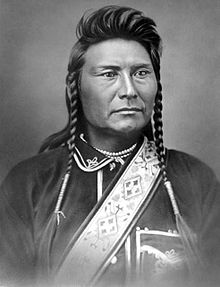
Chief Joseph-1877.jpg


Chief Joseph, 1840 - 1904, Nez Perce Tribal Nation.


"The Earth is the mother of all people, and all people should have equal right upon it."
Chief Joseph


Hin-mah-too-yah-lat-kekt, Hinmatóowyalahtq̓it in Americanist orthography, popularly known as Chief Joseph or Young Joseph (March 3, 1840 – September 21, 1904), succeeded his father Tuekakas (Chief Joseph the Elder) as the leader of the Wal-lam-wat-kain (Wallowa) band of Nez Perce, a Native American tribe indigenous to the Wallowa Valley in northeastern Oregon, in the interior Pacific Northwest region of the United States.

He led his band during the most tumultuous period in their contemporary history when they were forcibly removed from their ancestral lands in the Wallowa Valley by the United States federal government and forced to move northeast, onto the significantly reduced reservation in Lapwai, Idaho Territory. A series of events that culminated in episodes of violence led those Nez Perce who resisted removal, including Joseph's band and an allied band of the Palouse tribe, to take flight to attempt to reach political asylum, ultimately with the Lakota led by Sitting Bull, who had sought refuge in Canada.

They were pursued eastward by the U.S. Army in a campaign led by General Oliver O. Howard. This 1,170-mile (1,900 km) fighting retreat by the Nez Perce in 1877 became known as the Nez Perce War. The skill with which the Nez Perce fought and the manner in which they conducted themselves in the face of incredible adversity led to widespread admiration among their military adversaries and the American public.

Coverage of the war in United States newspapers led to widespread recognition of Joseph and the Nez Perce. For his principled resistance to the removal, he became renowned as a humanitarian and peacemaker. However, modern scholars, like Robert McCoy and Thomas Guthrie, argue that this coverage, as well as Joseph's speeches and writings, distorted the true nature of Joseph's thoughts and gave rise to a "mythical" Chief Joseph as a "red Napoleon" that served the interests of the Anglo-American narrative of manifest destiny.

www.wikipedia.com


"But then, my heart, it heard
My father's voice, like a great sky-cry
From snow-peaks in sunlight, and my voice
Was saying the Truth that no
White man can know, how the Great Spirit
Had made the earth but had drawn no lines
Of separation upon it, and all
Must remain as He made, for to each man
Earth is the Mother and Nurse, and to that spot
Where he was nursed, he must,
In love, cling."

from Robert Penn Warren's, "Chief Joseph of the Nez Perce"


IX


Kin 134: White Self-Existing Wizard


I define in order to enchant
Measuring receptivity
I seal the output of timelessness
With the self-existing tone of form
I am guided by the power of heart.


Offer your ego body and all of its attachments to the ether to be absorbed and dispersed through infinity.*


*Star Traveler's 13 Moon Almanac of Synchronicity, Galactic Research Institute, Law of Time Press, Ashland, Oregon, 2015-2016.


The Sacred Tzolk'in 


Sahasrara Chakra (Dali Plasma)


Sunday, May 1, 2016

Red Electric Skyalker/ Red Resonant Serpent - Planetary Dog Moon of Manifestation, Day 28


Plains Indian woman

Plains Indian woman on muleback, circa 1850s. Artist Friedrich Richard Petri
 painted a variety of people and scenes in the area of his Fredericksburg home
 in the Texas Hill Country. His drawings of Indians in the area document
 not only their costume and habits but their amicable relationships with some of the settlers.


The Toboso people were an indigenous group of what is today Chihuahua and Coahuila who lived along the middle reaches of the Conchos River as well as in the Bolsón de Mapimí. They were associated with the Jumano and are sometimes identified as having been part of the Jumano people.

The Toboso were associated with the inhabitants of La Junta de los Rios near Presidio, Texas. However their living further south and more exposed to Spanish slaving raids led to them having a different reaction to Spanish explorers. For example while the Indians at La Junta, often collectively called Jumanos, welcomed Antonio Espejo's expedition in 1583, the Toboso fled from his expedition in terror.

The Toboso began to attack Spanish controlled and Tarahumara inhabited missions and mines to their west in the 1640s. Later many of the Toboso were taken to the missions around Monterrey, Mexico. While there they learned Spanish. A large number of the Toboso left the missions and rejected Christianity. The Toboso were classed as "ladinos" Indians by the Spaniards, a term meaning "cunning" and indicating they knew the Spanish way of life and used it to be more effective in fighting the Spanish. The Toboso also made significant raids against the Tarahumara missions and ranches in the 1690s.

In the 1680s the Jumano at La Junta were so little aligned with the Toboso that Juan Sabeata was still willing to cooperate with Juan de Retana after Retana spent some time fighting against the Toboso.

The Toboso were organized by bands. The number of bands decreased over time. In the 1680s there were 12 bands. As of 1693 the Spanish only uidentified four Toboso bands, the Osatayogliglas, Guazapayogliglas, Chichitames, and Sisimbles.

By 1800 the Toboso who remained in modern Mexico had been essentially absorbed into Hispanic culture. However other Toboso migrated to coastal Texas where they resided in and near Mission Nuestra Señora del Refugio from 1807 until at least 1828. These dates are based on baptismal records kept at that mission identifying Toboso present there. Matagorda Island was known in the 18th century, at least from 1776 on as Toboso Island and was inhabited by people who had fled Mission Rosario and Mission Espiritu Santo as well as Karakawans. It is possible this name reflected some Tobosos people being among those who lived on the island.

www.wikipedia.com


BEN


Kin 133: Red Electric Skywalker


I activate in order to explore
Bonding wakefulness
I seal the output of space
With the electric tone of service
I am guided by the power of navigation.


The components of all creation (past, present, future) can be located synchronously on the always-existing screen of the ever-present now.*


*Star Traveler's 13 Moon Almanac of Synchronicity, Galactic Research Institute, Law of Time Press, Ashland, Oregon, 2015-2016.


The Sacred Tzolk'in


Anahata Chakra (Silio Plasma)